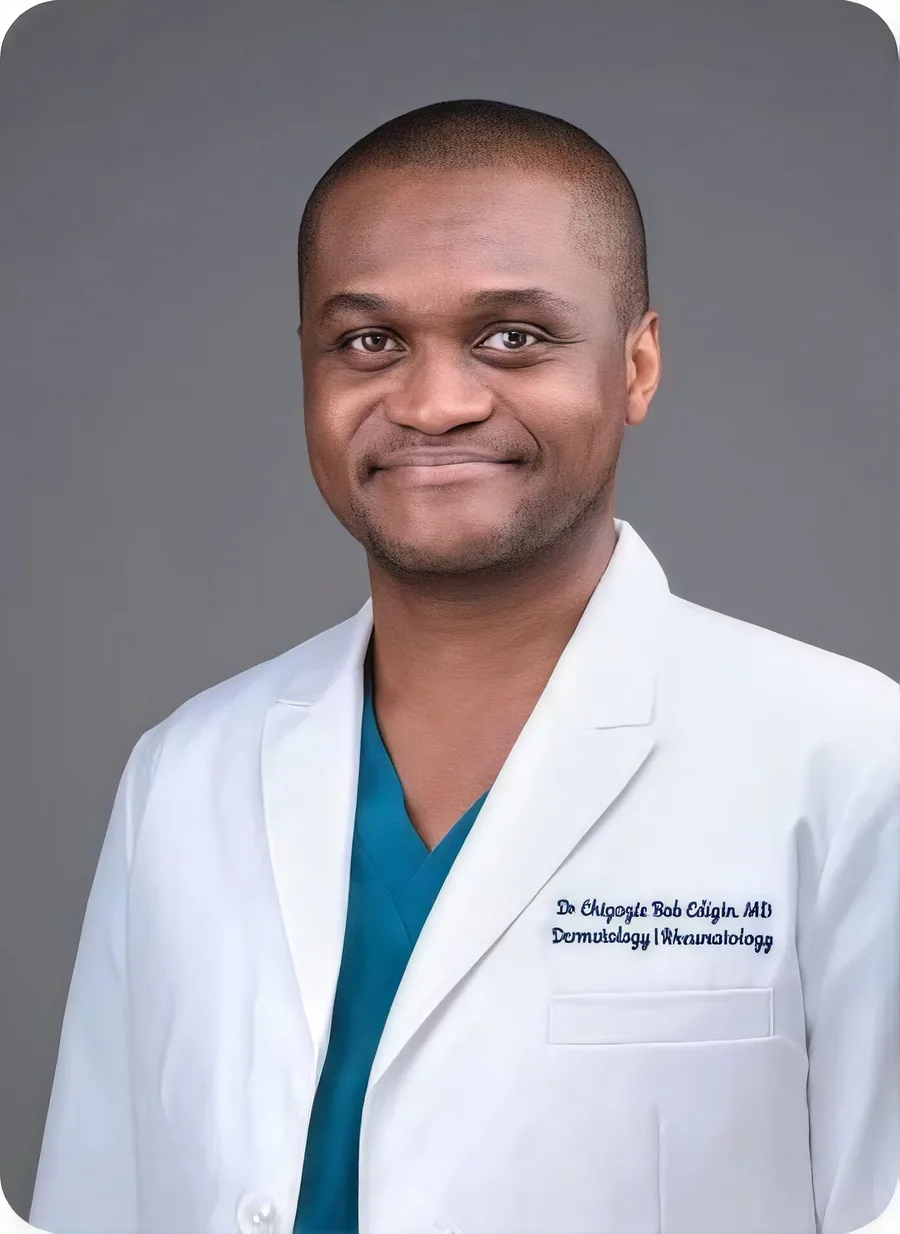
Dermatology built for darker skin tones, led by one of fewer than 5% of U.S. dermatologists who are Black. Treatment plans are designed to clear the condition and protect an even skin tone.

Many skin conditions look different in skin of color, and some treatments carry a higher risk of dark marks or light patches. Dr. Edigin chooses each treatment with your skin type in mind, so the result does not leave new discoloration behind.

Dr. Edigin is a member of the Skin of Color Society and has more than 160 peer-reviewed publications and abstracts, in journals including JAAD and JAMA Dermatology.
Dr. Ehizogie Bob Edigin is board certified in dermatology, rheumatology, internal medicine and lifestyle medicine. He completed his dermatology residency at UTHealth Houston with MD Anderson Cancer Center and his rheumatology fellowship at Loma Linda University Health.
Concerns that are more common, or look different, in darker skin.
Dark spots and patchy pigment corrected gradually and safely, with a plan to prevent them returning.
A multimodal approach that shrinks raised scars and lowers the chance they come back.
Early recognition of scarring hair loss, when treatment protects the most hair.
Bumps and ingrown hairs calmed and prevented, with less scarring and darkening.
The cost of a self-pay skin of color dermatology visit at Edigin Health in Spring, TX ranges from $199 to $299, with in-office treatments priced separately.
Pathology (lab analysis) fees are billed separately, and procedure pricing can vary with clinical complexity. You receive a personalized estimate during your visit.
We accept Aetna, Blue Cross Blue Shield, Cigna, UnitedHealthcare, Curative and Medicare, and no referral is needed. See insurance and self-pay pricing or check your coverage online before your visit.
Yes. Dr. Edigin is a Black, board-certified dermatologist who sees patients at our Spring and Pearland, TX offices and by telehealth across Texas.
Conditions such as eczema, acne and lupus can look different in darker skin, and some treatments raise the risk of pigment change. Experience with skin of color helps get the diagnosis right and keep your tone even.
Yes. We find the trigger first, then correct pigment gradually with treatments and peels selected for darker skin, followed by a maintenance plan.
Yes. We use a combination of treatments, including in-office steroid injections, to reduce keloids and lower the chance they return.

New patients are welcome at both offices, and telehealth visits are available across Texas.
